Filter by
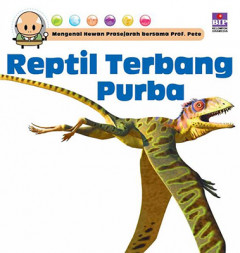
MENGENAL HEWAN PRASEJARAH BERSAMA PROF PETE: REPTIL TERBANG PURBA
Tahukah kamu bahwa... Dinosaurus yang bisa terbang punya tulang yang sangat ringan? Ada reptil terbang purba yang mempunyai sifat mirik kelelawar? Bentuk mulut reptil terbang purba mirip satu sama lain?.
- Edition
- Cetakan Pertama
- ISBN/ISSN
- 9786024557133
- Collation
- 24 page : color illustrations ; 20 cm
- Series Title
- MENGENAL HEWAN PRASEJARAH BERSAMA PROF PETE
- Call Number
- 591 DAV m
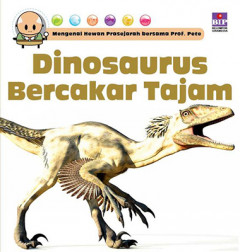
MENGENAL HEWAN PRASEJARAH BERSAMA PROF PETE: DINOSAURUS BERCAKAR TAJAM
Tahukah kamu bahwa.. Therizinosaurus adalahherbivor dan gerakannya lambat? Micoraptor berarti pencuri kecil?
- Edition
- Cetakan Pertama
- ISBN/ISSN
- 9786024557164
- Collation
- 24 page : color illustrations ; 20 cm
- Series Title
- MENGENAL HEWAN PRASEJARAH BERSAMA PROF PETE
- Call Number
- 591 DAV m
MENGENAL HEWAN BERSAMA NORA: HEWAN DI TAMAN
Nora akan mengajak anak-anak untuk mempelajari fakta menarik tentang hewan yang ada di taman, mulai dari serangga, burung, rubah, dan lainnya. Buku ini membantu orangtua untuk menjelaskan secara sederhana dan menyenangkan kepada anak-anak tentang hewan-hewan tersebut dengan disertai dengan foto-foto.
- Edition
- Cetakan Pertama
- ISBN/ISSN
- 9786023948673
- Collation
- 24 page : color illustrations ; 20 cm
- Series Title
- MENGENAL HEWAN BERSAMA NORA
- Call Number
- 591 DAV m
MENGENAL HEWAN LIAR BERSAMA SAM: HEWAN DI GURUN
Tahukah kamu, bagaimana para hewan liar bertahan hidup di gurun? Buku ini berisi tentang pengenalan hewan-hewan yang ada di gurun. Ada beberapa hewan liar di gurun yang ditampilkan, seperti unta, koyote, kalajengking, dan beberapa hewan lainnya. Buku ini dilengkapi juga dengan penjelasan singkat karakteristik dan fakta menarik tentang hewan yang ditampilkan. Dengan bahasa yang sederhana dan ilu…
- Edition
- Cetakan Pertama
- ISBN/ISSN
- 9786024556600
- Collation
- 24 page : color illustrations ; 20 cm
- Series Title
- MENGENAL HEWAN LIAR BERSAMA SAM
- Call Number
- 591 DAV m
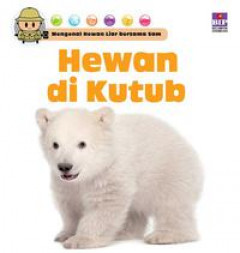
MENGENAL HEWAN LIAR BERSAMA SAM: HEWAN DI KUTUB
Melalui seri Mengenal hewan liar bersama Sam, anak-anak diperkenalkan kepada hewan di kutub. Pada judul ini, beberapa hewan yang dibahas adalah rubah Arktika yang berbulu putih, karibu yang memiliki dua lapis bulu, dan walrus yang menggunakan bulu moncongnya untuk menemukan kerang
- Edition
- Cetakan Pertama
- ISBN/ISSN
- 9786024556617
- Collation
- 24 page : color illustrations ; 20 cm
- Series Title
- MENGENAL HEWAN LIAR BERSAMA SAM
- Call Number
- 591 DAV m
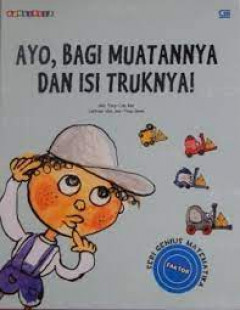
Genius Matematika : Ayo Bagi Muatannya dan Isi Truknya - Genius Matematika: F…
Mau jadi genius matematika? Gampang! Baca seri ini, dijamin kau bakal jadi genius matematika paling jempolan di dunia! Mengapa? Karena kau akan berkenalan dengan berbagai konsep matematika dengan cara paling mudah dan menyenangkan, yaitu lewat cerita sehari-hari yang lucu dan konyol. Seri ini selain menjelaskan konsep matematika lewat cerita, di bagian belakang juga tersedia keterangan yang …
- Edition
- cetakan 1
- ISBN/ISSN
- 9789792261141
- Collation
- Halaman 32, Ukuran: 22 x 27 cm
- Series Title
- Genius Matematika
- Call Number
- 547 KIM G
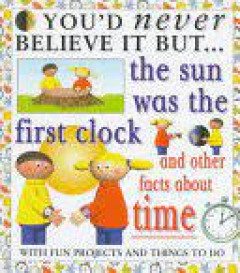
The sun was the first clock : and other facts about time
Summary:Discusses different aspects of time and how we measure it, including clocks, calendars, time zones, day and night, the seasons, and more. Includes related activities
- Edition
- 1st ed
- ISBN/ISSN
- 9780761332527
- Collation
- 32 pages : color illustrations ; 25 cm.
- Series Title
- You'd never believe it but--
- Call Number
- 529 COP y

Heat and energy
Provides instructions for a variety of experiments and projects related to heat and energy resources, including how to make a simple thermometer, battery, and paddleboat
- Edition
- English, 2001
- ISBN/ISSN
- 9780761324539
- Collation
- 48 pages : color illustrations ; 27 cm.
- Series Title
- Fascinating science projects
- Call Number
- 536 BOB f
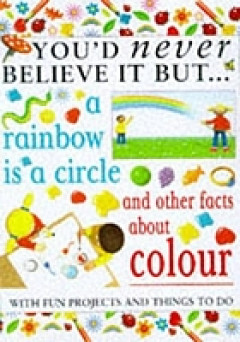
A raindow is a circle : and other facts about colour
Summary:Introduces colours, looking at primary and secondary colours, recognizing colours, colours in light, and more. Includes simple projects. Suggested level: junior, primary
- Edition
- English, 1999
- ISBN/ISSN
- 9780761332503
- Collation
- 32 pages : color illustrations ; 24 cm.
- Series Title
- You'd never believe it but--
- Call Number
- 535 COP y
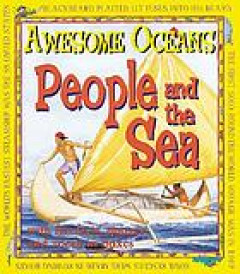
People and the sea
Discusses the ways in which humans have used the ocean in the past and present for transportation and exploration as well as for a source of food and materials
- Edition
- English, 2002
- ISBN/ISSN
- 9780761328179
- Collation
- 32 pages : color illustrations ; 26 cm.
- Series Title
- -
- Call Number
- 551.4 MIC p
 Computer Science, Information & General Works
  Philosophy & Psychology
  Religion
  Social Sciences
  Language
  Pure Science
  Applied Sciences
  Art & Recreation
  Literature
  History & Geography